
Was Sie wissen,
soll nicht mit Ihnen gehen.What you know
should not leave with you.
Vermögen kann man vererben. Werte kann man aufschreiben.Aber warum Sie im entscheidenden Moment Nein gesagt haben, wissen nur Sie.Stellen Sie sich vor, Ihre Gründe, Ihre Maßstäbe und Ihre Erfahrung bleiben.Ihre Nachfolger und deren KI arbeiten damit weiter. Lange nach Ihnen.Es bleibt nicht der Mensch. Es bleibt sein Urteil, in seinen eigenen Worten. Andreas Ehstand hält sein eigenes Denken so fest: über 7.000 Begriffe, ein Universum zum Hineinfliegen.Wealth can be inherited. Values can be written down.But why you said no at the decisive moment, only you know.Imagine your reasons, your standards and your experience remain.Your successors and their AI keep working with them. Long after you.The person does not remain. Their judgment does, in their own words. Andreas Ehstand records his own thinking this way: more than 7,000 terms, a universe you can fly into.
So wird Erfahrung weitergegebenSee how experience is passed on → Das Gedanken-Universum ansehenSee the universe of thought →
Überblick und HintergründeOverview and background
Die Filme zum Gedanken-Universum sind Bildschirmaufnahmen. Alle anderen Filme auf dieser Seite sind mit künstlicher Intelligenz erzeugt, keine reale Aufnahme.The films of the universe of thought are screen recordings. All other films on this page are generated with artificial intelligence, not real footage.
Eine Entscheidung. Ihre Gründe.A decision. Its reasons.
Three things a founder can pass on — one is almost always missing
When a person hands on a life's work, we think first of capital. It is carefully stewarded: advisors, structures, agreements. Increasingly, we also look after the values — what a family or a company truly stands for. That is good.
But there is a third tier, almost always overlooked: judgment. The way a founder decides in an unclear situation. Why they say no to this particular venture and yes to that one. This knowledge is unspoken — it lives in experience, not in files. Which is exactly why it is so valuable to capture it in time.
Zum AnfassenTry it yourself
Was über Generationen bleibtWhat lasts across generations
Ziehen Sie den Regler von heute bis zu den Urenkeln. Achten Sie darauf, was bei „Urteil“ geschieht.Move the slider from today to the great-grandchildren. Watch the third pane.
Ein Sinnbild, keine Messung.An illustration, not a measurement.
The fire, not the smoke
A founder's judgment is tacit knowledge — knowledge one holds but can barely put into words. We collect stories and anecdotes, and that is valuable. But anecdotes are only the smoke of the fire, not the fire itself — they show that something burns, but not how it burns.
When judgment is not preserved, a silent drift begins. The next generation keeps deciding, with the best intentions, but the fine judgment that once stood behind it fades year by year. No one pulls the plug; the light simply dims. Written down, that fine weighing can be read and used by the next generation.
After the handover, you can look up why the founder said no to exactly this one thing — not only that he did.
A local AI as a quiet thinking mirror
The idea is not to replace a person, but to hold up a quiet mirror. An artificial intelligence that runs entirely on a person's own computer, can work without any internet connection, and helps them see their own thinking more clearly, in conversation. It reflects back; it does not prescribe.
In elite sport, a performance is broken down into nameable parts. This method does the same for thinking: real decision moments become your own terms — words with a fixed meaning — in five steps: Observe, Name, Distill, Connect, Return.
How exactly do moments become terms?
What emerges, in the end: not an off-the-shelf app, but a private map of terms in open file formats — it stays with you, not in someone else's cloud.
-
No digital double is created, and no voice that speaks for anyone.
-
The tool makes no decisions and predicts nothing. It only reflects.
-
Control rests with the person at all times — they lead, the tool follows.
-
Nothing travels to an outside cloud. The data stays where it belongs.
-
The tool pursues no agenda of its own — it asks questions, pauses, waits. It never pushes.
How judgment is given an edge
For a family, this means: the successor receives not just anecdotes, but two solid tools — the founder's own map of concepts, and the sharp boundary of each individual term.
Personal map of concepts
An ordered map of the concepts a person actually thinks with — and how those concepts connect. Not a general dictionary, but the real map of one particular person's mind.
Bidirectional Definition
A term is fixed by what it means — and equally by what it excludes. Only both sides together give it a sharp edge and set it apart from everything close to it.
These are the open terms of the method. Exactly how the work is done remains within the practice.
Give your own judgment an edge
Think of one decision where you simply knew what was right. Tap two example sentences: what belongs — and what expressly does not? Nothing is saved or sent anywhere.
Tap one sentence on each side — the edge sharpens.
—
Abbild eines Denkens · BildschirmaufnahmeAn image of one mind · Screen recording
Über 7.000 Begriffe. Ein Denken, durch das Sie fliegen.More than 7,000 terms. One mind you can fly through.
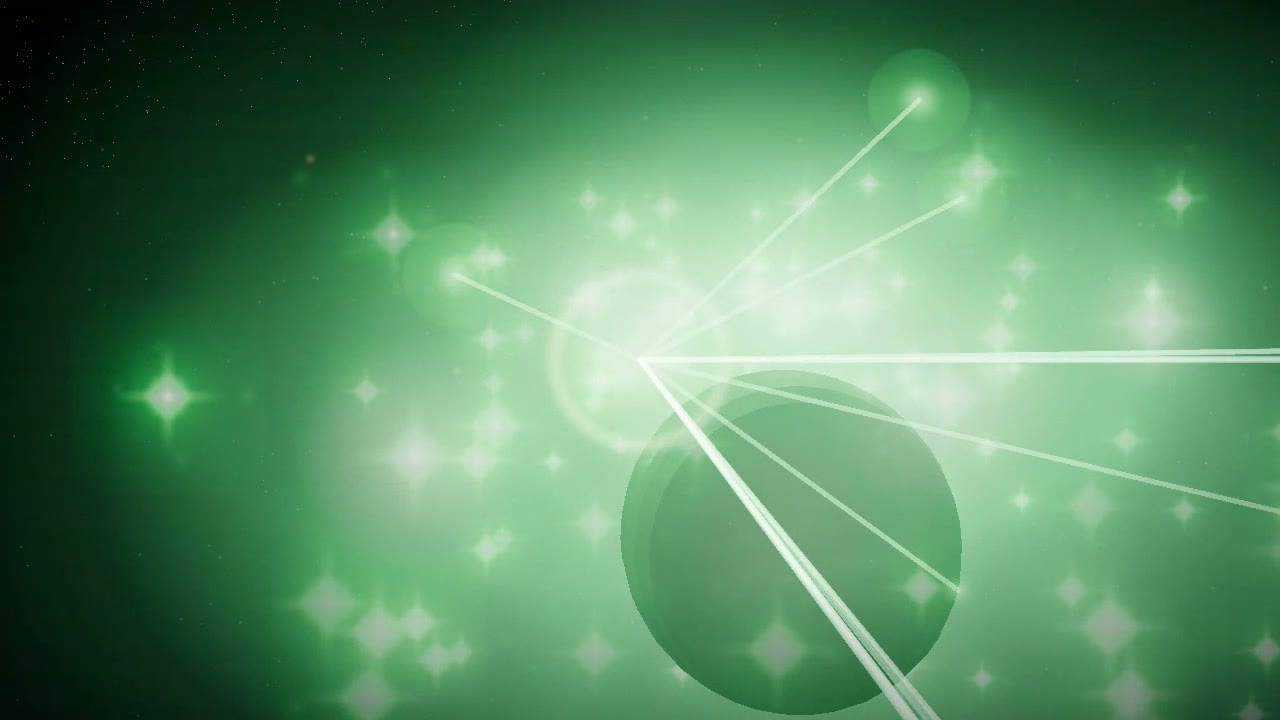
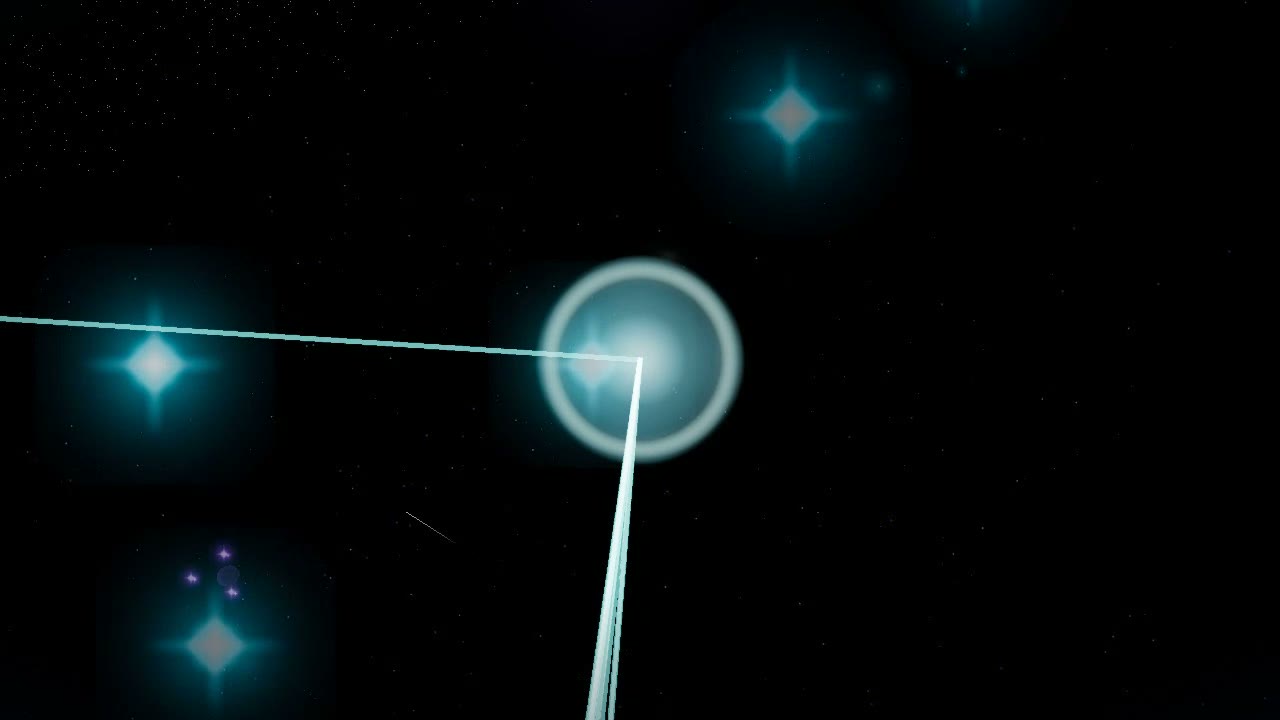
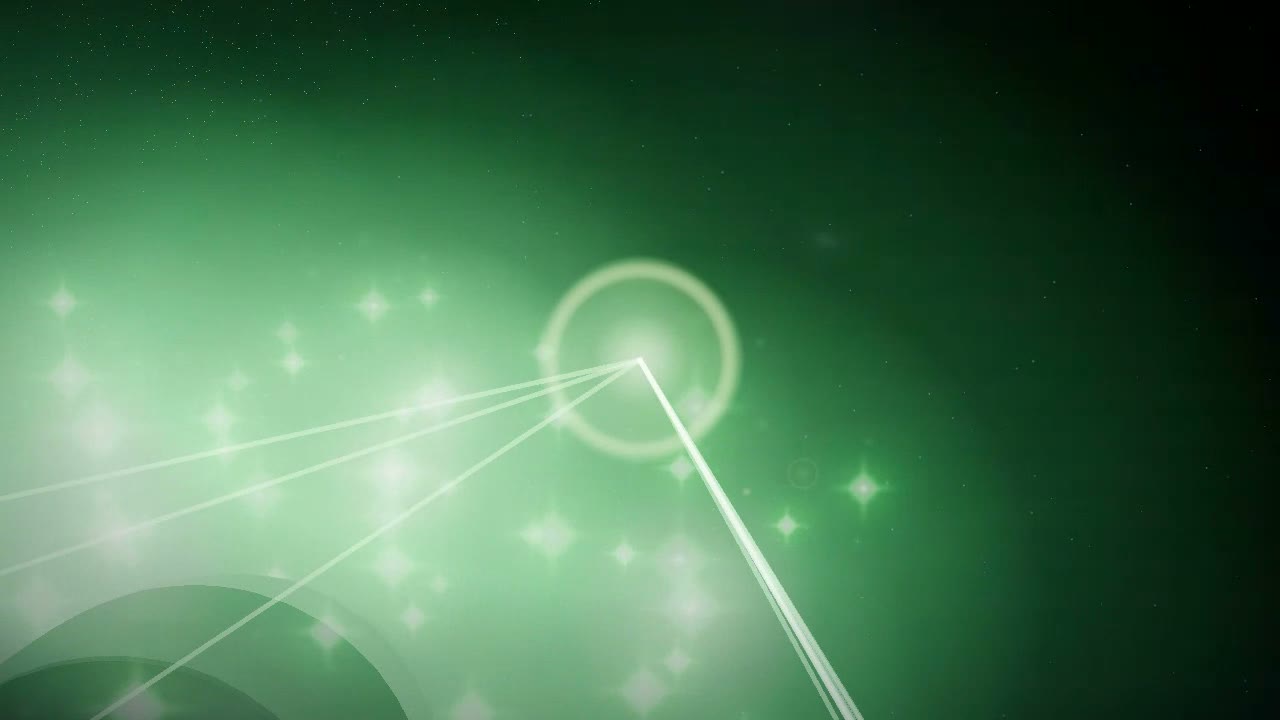
So kann festgehaltenes Denken aussehen. Die Lichtpunkte stehen für Begriffe aus dem Arbeitsnetz von Andreas Ehstand, über 7.000. Was nah beieinander liegt, gehört zusammen. Die Linien zeigen Verbindungen zwischen Begriffen.This is what recorded thinking can look like. The points of light stand for terms from Andreas Ehstand’s working network, more than 7,000. What lies close together belongs together. The lines show connections between terms.
Der Film ist eine Bildschirmaufnahme der Anwendung. Sie berechnet das Bild aus den gespeicherten Begriffen. In der öffentlichen Fassung können Sie selbst hineinfliegen: 57 Begriffe sind dort lesbar, alle übrigen sind versiegelt.The film is a screen recording of the application, which computes the image from the stored terms. In the public edition you can fly in yourself: 57 terms are readable there, all others are sealed.
Where the line is
Erstens: Eine Aufzeichnung soll Gründe und Erfahrungen nachvollziehbar machen. Ein überliefertes Urteil ersetzt keine neue Entscheidung in einer veränderten Situation.
Weitere Grenzen im Einzelnen
Second: a preserved judgment can later be read like a law. It is a compass, not a script. The result therefore always includes an accompanying note stating how it must not be used — the risk cannot be ruled out entirely.
Third: for many purposes, simpler and long-proven tools are enough — a decision journal, well-led memory conversations, clear rules on who decides what. Where those suffice, this method is not needed.
Fourth: no one can capture the whole of a person’s quiet knowledge. This work makes an important part visible — no more. And the result is itself a sensitive asset: it deserves the same careful protection as important contractual papers.
Fifth: the test figures of the method are openly readable: to the verification page.
Sixth: whoever keeps the result — as intended — on their own devices is also responsible there: for backup copies, for the hardware, for deciding who gets access. That is the flip side of being the sole owner of your own data — intended, but honestly: work.
And anyone who begins has two firm rights: to stop at any time, and to have everything that has been created irrevocably deleted. The time required is deliberately limited. Some will stop early; that is expected, not a failure.
And the confidentiality question, before someone raises it for you: this work is built so that sensitive material stays on site — the research runs on its own machine without cloud dependency (documented on the machine page), and the result stays, as intended, on your own devices. None of it has to leave the house.
And the time question, answered honestly: your part is speaking, not writing. In conversation you describe how you decide — the capturing, ordering and articulating are done by the method; there are no forms and no homework. Even a single clearly stated thought already yields a visible piece — you can try that yourself in the picture workshop, in under a minute.
Den vollständigen Essay lesenRead the full essay
One Missing Piece of Legacy:
How Local AI Preserves a Founder’s Judgment
Wealth is passed on. Values, increasingly, are too. Judgment almost never is.
When someone who built something — a company, a practice, a family with history — passes on, the numbers remain. Accounts, contracts, holdings: cleanly transferable; that is what notaries are for. In recent years, the values remain too: family charters, mission statements, foundation purposes. Rightly so.
But the third thing is lost: the way this one person decided. How they told a good opportunity from a shiny trap. Which questions they asked before saying yes. This third thing has no folder. It lives quietly, in a thousand small decisions — and it disappears the moment no one can ask any more: how would you have seen this?
Successors feel this gap first. Not at the great crossroads — advisory boards exist for those. But it shows in the medium-sized decisions that come up dozens of times a year: the founder would have known in two minutes, while the successor struggles for two weeks. What is missing is not factual knowledge. It is judgment — quiet knowledge born of experience.
Why now
Two things are converging. First: artificial intelligence is doing more and more of the actual work — texts, analyses, drafts. What remains with the human is exactly what machines cannot supply: deciding what counts. The more execution machines take over, the more weight inheritable judgment carries — and the costlier its absence becomes in the next generation.
Second: judgment can now be captured — no longer only as a collection of anecdotes, but systematically. The work behind this essay has documented, for years, how people think and decide with artificial intelligence: recorded human–AI conversations (counting method on this site's verification page). From them has grown a network of precisely named terms. The method behind it comes from elite sport: break a performance into nameable parts, observe each part, record each part.
What is captured
Not the life story — that already exists, in photo albums and biographies. What is captured is the recurring pattern of decisions behind it, in three parts. First, the distinctions: the differences this person saw where others saw sameness — each one gets a name, a date and its context. Second, the test questions: questions that can keep working in new situations, if they are captured as a clear rule and not as an anecdote. Third, the limits: where this person said ‘this far and no further’ — and why. Limits are lost fastest and missed most keenly.
What emerges from all this is not a monument but a working instrument: an ordered, walkable network of terms, questions and documented decision moments that a family or a company can consult when the person can no longer be asked.
Why local
Wissen auf eigenen Geräten bewahren – mit lokaler KI, auch vollständig vom Internet getrennt. In einem entsprechend eingerichteten, abgeschotteten System bleibt die Verarbeitung vor Ort. Welche Geräte, Zugänge und Datenträger dazugehören, wird für die konkrete Umsetzung festgelegt.
What this is not
Honesty is part of the craft, so let it be said plainly: no method in the world preserves a person. What is preserved is a documented, ordered trace of their thinking — no more, and that is a great deal. The result replaces no advice from doctors, lawyers or boards, and it makes no decisions. The underlying method is continuously tested and refined. Anyone being sold certainty here should grow suspicious — what is preserved is judgment, not infallibility.
The third stage
The first stage of legacy was wealth. The second is values. The third stage is judgment — and it is the first stage that neither notaries nor mission statements can carry — only careful, patient, documented work with the person themselves can, while they are still here. While the person can still be asked, the trace can be laid; afterwards, only reconstruction remains.
Diese Themen gibt es auch als Vortrag: „Gedanken-Vermächtnis“ und „Wissen, das bleibt“.These themes also exist as talks: “Thought legacy” and “Knowledge that stays”.
If this subject moves you
This research looks at how a judgment can be preserved. The contact address for scholarly exchange is below.
Für eine erste Nachricht genügt eine Frage zum Thema. Vertrauliche Unterlagen oder persönliche Entscheidungsdaten sind dafür nicht erforderlich.
Das öffentliche Lexikon und die Beleg-Seite zeigen die veröffentlichten Begriffe und Quellen.
And without the term network?
Andreas Ehstand · Partner und Redner beim Family Office Forum Zurich 2026 von Prestel & Partner im Dolder Grand · Mitglied im AI Future Council des Swiss Future Institute · BVMID Top-Experte 2026 für IT und KI · Internet-Entwurf bei der IETF (dem Gremium für Internet-Standards) zu menschlicher Aufsicht · Nachweise ansehenAndreas Ehstand · Partner and speaker at Prestel & Partner’s Family Office Forum Zurich 2026 at The Dolder Grand · Member of the AI Future Council, Swiss Future Institute · BVMID Top Expert 2026 for IT and AI · Internet-Draft at the IETF (the body for internet standards) on human oversight · See the records
ORCID verified 101 terms in the public lexicon listed on Wikidata
Without obligation and in confidence. This is about exchange, not sales.
What one person quietly decided becomes — thread by thread — something others can read.
· KI-Bild· AI image
Aufschreiben und bewahren — zwei stille Momente. · KI-Bilder Writing down and preserving — two quiet moments. · AI images
Als NächstesLeistungWas geschieht, wenn Mensch und KI zusammen arbeiten — und wer behält dabei das Urteil?Weiter →